
Car insurance protects you against covered financial losses from accidents, theft and other risks. Third-party liability cover is mandatory under the Motor Vehicles Act, 1988, while comprehensive and own-damage plans offer broader protection. HDFC ERGO makes buying, renewing and claiming convenient, subject to policy terms.


3.1 Crore+
Happy Customers@
12200+ Cashless
Garagesˇ
Over Night
Vehicle Repairs¯
4.4
Customer RatingsQuick Quote for your Car Insurance

Need Help? Talk to our experts 022-62426242
Car Insurance
What Is Car Insurance?
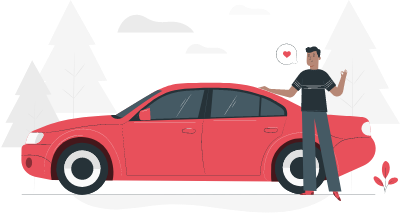
Car insurance is a financial safeguard that reduces your out-of-pocket expenses when a covered event damages or destroys your vehicle. Depending on the plan, it can protect your car, cover third-party liabilities, or both.
HDFC ERGO offers comprehensive, third-party, standalone own-damage and electric car insurance, giving you suitable coverage options for both conventional and electric vehicles, subject to policy terms.
What Are the Key Features of HDFC ERGO’s Car Insurance?
HDFC ERGO’s car insurance plan is designed to provide reliable protection, flexible coverage, and a smooth claims experience for its policyholders.
The car insurance features below highlights how the policy supports you financially and practically in everyday driving situations.
| Key Features | Benefits |
| Third Party Damages | Covers personal accidents, third party injuries, and property damages |
| Own Damage Cover | Covers damage to your car due to accidents, fire & explosion, theft, and calamities |
| No Claim Bonus | Up to 50% |
| Car Insurance Premium | Starts at ₹2,094* |
| Personal Accident Cover | Up to ₹15 lakhs~* |
| Cashless Garages | 12,200+ ˇ all across India |
| Add-on Covers | 8+ Add-on covers, such as Zero Depreciation, Return to Invoice, and more |
Quick Summary
- • Car insurance provides financial protection against covered damage or loss to your car, along with third-party liabilities based on the policy chosen.
- • Third-party cover is mandatory under the Motor Vehicles Act, 1988, while comprehensive and standalone own-damage plans offer broader vehicle protection, subject to policy terms.
- • HDFC ERGO offers comprehensive, third-party, standalone own-damage and electric car insurance options for different vehicle needs.
- • Add-ons such as Zero Depreciation, Engine Protect and Roadside Assistance can enhance coverage, depending on eligibility and policy terms.
- • Car insurance premiums depend on factors such as the car’s make and model, age, location, IDV, claim history and selected add-ons.
- • With 200+ branches across 170+ cities, HDFC ERGO offers wide service support along with convenient online policy purchase and renewal.
- • ICRA has assigned HDFC ERGO an ‘iAAA’ rating, indicating the highest claim-paying ability.

No compromise on repairs- enjoy unlimited Zero Depreciation claims with HDFC ERGO Car Insurance. Buy Online Instantly!
Choose from the Best Car Insurance Policies
Car insurance policies are designed to meet different usage patterns and protection needs. Below are the main car insurance types offered by HDFC ERGO

Comprehensive Car Insurance

Third Party Car insurance

Standalone Own Damage Cover

COVER FOR BRAND NEW CAR


Comprehensive Car Insurance
Comprehensive Car Insurance provides complete protection by covering both third party and own damage cover. It protects your vehicle against legal liabilities and vehicle damage from accidents, theft, fire, or natural disasters.
X
This plan covers:

Accidental damages
Personal accidents
Natural calamities
Third party liability
Option to customise with add-ons

Theft


Please refer to the list of Active Products & Withdrawn Products before purchasing any policy.
HDFC ERGO Car Insurance Add-Ons Covers
Car insurance add-on covers provide extra protection beyond the standard policy by covering specific risks and expenses. HDFC ERGO lets you customise your car insurance with optional add-ons based on your vehicle, usage and protection needs, subject to policy terms.


This add-on ensures you get the full claim amount without depreciation cuts. Depreciation is the gradual drop in the value of parts due to usage and aging.
Example: Your car’s bumper and headlamp get damaged in a minor accident. With Zero Depreciation, the insurer covers the full replacement cost without depreciation cuts.

NCB Protection ensures your accumulated NCB remains intact even if you make a claim during the policy year.
Example: You have a small parking dent and make a claim. Normally, you lose your NCB. With NCB Protection, you retain your discount for renewal.

This add-on gives you 24/7 support for car-related emergencies like breakdowns, flat tyres, or dead batteries, anywhere during your trip.
Example: Your car stops on a highway due to a battery issue at night. With Roadside Assistance, a team arrives to jump-start your battery or tow your car.

Cost of Consumables Cover
This add-on covers consumable items used during repairs, which are otherwise excluded from standard claims.
Example: After an accident, your car needs repairs and consumables worth ₹3,000. Without this add-on, you pay out-of-pocket. With it, the insurer pays for those consumables.
Tyre Secure Cover
With tyre secure cover, you get coverage for expenses related to replacing the tyres and tubes of the insured vehicle.
Example: You hit a pothole, and your tyre develops a sidewall bulge requiring replacement. Tyre Secure covers the cost of the new tyre.

EMI Protector
With the EMI protector, the Car insurance company will pay equated monthly instalment amount (EMI) to the insured.
Example: Your car is in the workshop for over 30 days after an accident. EMI Protector helps pay your EMI during that period.


This add-on pays you the original invoice value (purchase price) of the car in case of total loss or theft, instead of the reduced market value
Example: Your car is stolen within 2 years of purchase. Without RTI, you get the depreciated value. With Return To Invoice Cover, you get the full invoice value including registration and tax components.

Engine and gearbox add-on cover provides coverage for repair expenses arising from issues like water ingress or oil leakage, events usually not covered under standard policies.
Example: During monsoons, you have to drive through waterlogged roads, and your engine suffers hydrostatic lock. With this engine protection add on cover, the engine repair costs are covered.

Downtime Protection helps cover daily travel expenses when your car is unavailable due to repairs.
Example: Your car is under repair for 10 days. You rely on cabs for work travel and Downtime Protection helps reimburse those transportation expenses.

Loss of Personal Belongings Cover
This add-on provides compensation for personal items stolen or damaged while kept inside the insured vehicle.
Example: Someone breaks your car window and steals your cell phone. This add-on helps you recover the cost of the stolen phone.
Pay As You Drive Cover
With pay as you drive add-on cover, you can get the benefits on the own-damage premium at the end of the policy year, for low usage.
Real-life scenario: You commute occasionally and drive under 10,000 km in a year. With Pay As You Drive, you get premium benefits at policy end.

EMI Protector Plus
With this cover, you get extended EMI support based on the duration your car is under repair.
Example: Your car requires long-term repairs after an accident and remains at the workshop for over 60 days. EMI Protector Plus covers multiple EMIs during this period.

India’s passenger vehicle sales reached a historic high of 4.3 million units in FY 2024-25.
[2]
With such fast growth in the auto sector, having the right insurance coverage is essential to safeguard high-value, newly purchased vehicles.
With such fast growth in the auto sector, having the right insurance coverage is essential to safeguard high-value, newly purchased vehicles.
What Is Covered and Not Covered Under HDFC ERGO Car Insurance?
Car insurance coverage depends on the policy you choose. Under HDFC ERGO comprehensive or standalone own-damage car insurance, eligible loss or damage from accidents, theft or burglary, fire or explosion, and natural calamities such as floods may be covered, subject to policy terms. Third-party car insurance covers eligible legal liabilities to third parties. Certain events and expenses are excluded, so refer to the policy wording for complete inclusions, exclusions, limits and conditions.
HDFC ERGO Car Insurance provides broad protection against multiple risks that can affect your car or lead to financial loss. Here’s what is generally covered under the policy:

Natural Calamities
Your car is protected against damages caused by events like floods, storms, earthquakes, cyclones, landslides, and similar natural disasters. This ensures support during weather-related emergencies.

Fire & Explosion
Coverage includes damage due to fire, explosion, self-ignition, or lightning. Whether the damage is minor or results in total loss, repair or replacement costs are taken care of.

Theft & Burglary
If your car is stolen or damaged due to burglary or housebreaking, you are eligible for financial compensation as per the policy terms. Total loss due to theft is also covered.

Accidental Damage
Accidental damage caused due to collisions or external impact is covered. This includes scenarios where your car collides with another vehicle, object, or structure.

Man-made Events
Protection extends to riots, strikes, vandalism, terrorism, and other malicious acts that can damage your vehicle.

Transit Damage
If your car is being transported (by road, rail, inland waterways, lift, or elevator) and gets damaged, the costs are covered under the policy.
Third-Party Coverage
The policy covers financial loss arising from damage to third-party property or vehicle, as well as injury or death of a third-party individual caused by your car. This is also legally mandatory in India.
Personal Accident Cover (Owner-Driver)
The owner-driver receives financial protection in case of accidental injury, permanent disability, or death. A PA cover for the owner driver is mandatory as per the law.
While HDFC ERGO offers extensive protection, certain situations are not covered under the car insurance policy. These include:

Wear and Tear
Routine aging and normal wear and tear of the car are not covered. Depreciation of parts is also excluded unless a Zero Depreciation add-on is chosen.

Mechanical or Electrical Breakdown
Failures due to mechanical or electrical breakdowns are not covered. This includes internal failures that do not arise from an accident or an insured event.

Driving Without Valid Authorization
Claims are not payable if the vehicle was driven by someone without a valid driving licence, or if they were under the influence of alcohol or drugs.
Damage Outside India
Any loss or damage that occurs outside the geographical limits of India is not covered under the policy.
War and Nuclear Risks
Loss or damage caused due to war, war-like operations, mutiny, or nuclear incidents is excluded from coverage.
What Are the Key Factors Affecting Your Car Insurance Premium?
Your car insurance premium is calculated based on multiple factors related to your vehicle, usage, and other factors.
Understanding the key factors that affect your car insurance premium can help you make informed decisions and manage the overall cost of your car insurance policy.These factors also influence the car insurance price you pay at the time of purchase or renewal.
1
Age of the vehicle
As the vehicle gets older, its market value depreciates due to the wear and tear of the vehicle. This leads to lower depreciation value and a reduced Insured Declared Value (IDV), which generally results in lower car insurance quotes for
old vehicles.
2
IDV (Insured Declared Value) of the vehicle
IDV represents the maximum amount payable by the insurer in case of total loss or theft of the car. A higher market value increases the IDV, which directly impacts and raises your car insurance prices.
3
Your geographical location
The area where you drive and park your car also affects your Car insurance premium. Consider the fact that metro cities usually account for higher accident rates.
[1]
This means a higher chance of a claim, and hence, a higher premium.
4
Your car model
The cost of car insurance also depends on your car’s make and model. Luxury or high-end vehicles usually have a higher car insurance price as the spare parts, repairs, and replacements of these vehicles are generally expensive as
compared to others.
5
Fuel type
The type of fuel your car uses also affects insurance cost. Petrol cars generally have lower premiums, while diesel, CNG, or electric vehicles may attract higher premiums. This is because the latter options are more complex and expensive to repair.
6
Type of Cover
Your car insurance price will be higher for comprehensive insurance, as it provides coverage for own damage and third party liabilities. In comparison, the premium for the mandatory third party cover will be less.
7
Claims History
If you haven’t filed any claims in the previous year, you may get a No Claim Bonus (NCB). This discount reduces your own-damage premium and rewards safe driving habits.
8
Deductibles
Voluntary deductibles can reduce your four wheeler insurance premiums, as you are agreeing to pay a fixed amount during a claim. As a result, the insurer has to pay less during claim settlement, leading to a lesser premium.
9
Add-ons
Choosing add-ons like Zero Depreciation, Roadside Assistance, or Engine Protection increases the cost of your car insurance. However, they give you extra protection for situations not covered under a standard car insurance policy.
10
Manufacturing Year
Newer car models may be more expensive to insure, because their spare parts may be costlier or less readily available. If the car has advanced technology, it may also affect the premiums.
11
Location
If you live in a busy city with heavy traffic, the chances of accidents are higher. As a result, Car insurance premiums may be higher in urban areas compared to regions with lower traffic density.
You can buy and renew your car insurance online in just a few minutes, no paperwork needed!
With India recording over 2.3 million EV sales in 2025 alone, battery-powered vehicles are paving the way for the future. Protect your EV with a well-designed EV car insurance policy with HDFC ERGO! [5]
Compare HDFC ERGO Car Insurance Plans
HDFC ERGO offers three core car insurance cover options: third-party car insurance, standalone own-damage cover and comprehensive car insurance. They differ mainly in whether they cover third-party liabilities, damage to your own car, or both. The comparison below gives a quick view of the key differences, subject to policy terms.
 CHOOSE THIS | |||
|---|---|---|---|
| Feature | Third-Party Car Insurance | Standalone Own Damage | Comprehensive Car Insurance |
| What it covers | Eligible third-party legal liabilities for injury, death or property damage | Eligible loss or damage to the insured car | Third-party liabilities plus eligible loss or damage to the insured car |
| Own vehicle damage cover | No | Yes | Yes |
| Theft cover | No | Yes | Yes |
| Natural calamity cover | No | Yes | Yes |
| Add-on cover availability | Limited | Available, subject to eligibility | Available, subject to eligibility |
| Mandatory by law | Third-party liability cover is mandatory. | No | No |
| Who may consider it? | Car owners who need the legally required third-party cover | Car owners with a valid third-party policy who want own-damage protection | Car owners who want third-party and own-damage protection together |
Note: Coverage, exclusions, add-on availability and eligibility depend on the selected policy and applicable terms and conditions. Refer to the policy wording for complete details.
How to Calculate Car Insurance Premium
While buying or renewing a car insurance policy, it is necessary to know how its premium is calculated. Here’s a step-by-step guide for calculating your car insurance premium
Step 1: Visit the HDFC ERGO website and click on car insurance. On the top of the page, you can enter the vehicle registration number in the box and proceed by clicking on get a quote. You can even proceed without a car number or click on renew HDFC ERGO car insurance policy if your current policy with HDFC ERGO has expired.
Step 2: After clicking on get a quote or proceed without the car number, you will have to enter your car’s make and model.
Step 3:You must choose between a third party car insurance and a comprehensive car insurance plan
Step 4: Give details about your last insurance policy- Date of Expiry, No Claim Bonus Earned and Claims Made. Enter your mobile number and email ID.
Step 5: You can now view your car insurance premium. If you have chosen a comprehensive plan, you can customise your plan further by selecting add-ons like zero depreciation, emergency assistance, return to invoice and more.
Calculating car insurance premium at the HDFC ERGO website is smooth and easy. You can also use our car insurance premium calculator for your convenience.
How Can You Save on Car Insurance Premiums?
Every person wants to pay a low premium for their car insurance policy without compromising on essential coverage. Here are some simple and effective ways by which you can save on your car insurance premium:
1
Buy Pay as You Drive Cover
With this insurance cover, the insurer will offer benefits to the insured person at the end of the policy period if the policyholder has driven his/her vehicle less than 10,000 km. The coverage offered in ‘pay as you drive’
will be similar to regular car insurance policy.
2
Buy NCB Protection Cover
The NCB protection add-on ensures that you don’t lose your accumulated No Claim Bonus even if you make a claim. With this add-on, you can make up to two claims in a policy year without affecting your NCB benefits.
3
Avoid Raising Minor Claims
If there is minor damage to the vehicle due to an accident, then it is better to pay for the expenses by your own. This helps you retain your No Claim Bonus, which can reduce your premium at renewal.
4
Install Safety Devices
By installing safety devices in your vehicle, you can reduce your car insurance prices. Cars fitted with approved safety features, such as anti-theft devices or anti-lock braking systems, are considered lower risk. As a result, insurers
may offer a lower premium for such vehicles.
5
Choose Only the Coverage You Need
If you want to save on car insurance premiums, it is important that you review your coverage needs. Select add-ons that are relevant to how you use your car and avoid unnecessary covers. This helps keep your premium affordable.
6
Renew Before Expiry
Renewing your car insurance policy on time helps you retain your No Claim Bonus. If the policy is not renewed within 90 days of expiry, your NCB benefits may lapse. You will have to let go of the discount on your premium.
7
Opt for a Higher Voluntary Deductible
If you agree to pay a small portion of the claim from your side, insurers may offer a lower premium. This works well for safe and experienced drivers who rarely raise claims.
8
Take Advantage of Long-Term Policies
Choosing a long-term car policy (for up to 3 years) may cost less than renewing annually. It also protects you from yearly premium hikes and inflation adjustments.

You can buy and renew your car insurance online in just a few minutes, no paperwork needed!
GST on Car Insurance Premiums
Here’s a brief on GST and car insurance premiums:
Car insurance premiums attract 18% GST. Under the revised GST structure, there is no change in GST rates for motor insurance.
However, from 22nd September 2025, smaller cars are taxed at 18% GST instead of 28%, which lowers the car’s ex-showroom price.
| Particulars | Before GST Change (28%) | After GST Change (18%) |
|---|---|---|
| Base Price | ₹6,00,000 | ₹6,00,000 |
| GST | ₹1,68,000 | ₹1,08,000 |
| Ex-Showroom Price | ₹7,68,000 | ₹7,08,000 |
The Insured Declared Value (IDV) is linked to the vehicle’s ex-showroom price.
So, this reduction can also make comprehensive and own damage car insurance cheaper.
Third party insurance premiums remain unchanged, as they are fixed by IRDAI.
How to Buy or Renew a Car Insurance Policy Online?
Buying or renewing car insurance online is quick and convenient, with HDFC ERGO. Here are the procedures for both:
To buy car insurance online:
1. Enter your details:
Visit the HDFC ERGO website and choose ‘Car Insurance’ under the Buy tab. Enter your vehicle registration number and contact details.
2. Compare available plans:
Get instant car insurance quotes based on your details; you can compare coverage options to find the best car insurance price and fit for your needs.
3. Customize your plan:
Choose between Comprehensive or Third-Party coverage and add optional riders for extra protection
4. Make the payment:
Review your policy details, complete the payment online, and receive your car insurance policy instantly via email.
Buy a HDFC ERGO car insurance policy today!
To renew existing car insurance policy online:
1. Visit website:
Go to the HDFC ERGO website and proceed with ‘car insurance’ under the ‘Renew’ tab.
2. Modify coverage if needed:
Include or remove add-on covers based on your current needs and check the renewal premium.
3. Pay online and receive your policy:
Complete the payment online and get the renewed car insurance policy sent to your registered email ID.
Renew Your Car Insurance Now!
What are the Benefits of Buying/Renewing Car Insurance Online?
When you buy or renew your car insurance policy online through HDFC ERGO website, you can enjoy several benefits.
1
No Paperwork
The entire process is digital. You can purchase car insurance online and renew it without filling out forms or submitting physical documents.
2
Easier to Check the Insurer’s Credibility
It is easier to check the credibility of an insurer when you buy car insurance online. You can easily review the insurer’s claim settlement process, turnaround time, and customer support details directly on the website before making
a decision.
3
No Brokerage
There are no middlemen involved when you directly buy the Car insurance policy online. This helps you save on the brokerage charges.
4
Quick and Easy Comparison
Free quotes and easy access to websites ensures a quick four wheeler insurance comparison of policies and helps you evaluate the car insurance price effectively.
5
Access to Online Discounts
Online buying lets you view quotes instantly and compare coverage options. This makes it easier to choose the right four wheeler insurance policy.
6
Easy to Switch Insurer or Coverage
During car insurance renewal, you can opt for a different insurance provider or upgrade your coverage. You can compare different options and choose the best car insurance plan as per your evolving needs.
7
Instant Policy Issuance
When you buy new car insurance or renew car insurance online, your policy is mailed to you almost instantly on your registered email ID. You don’t have to wait for days to receive your policy document.
8
Easy Customisation
While purchasing comprehensive cover or own damage cover online, you can customise your car insurance policy by adding relevant add-ons as per your requirements.
India is home to NATRAX, one of the longest high-speed automotive test tracks in Asia.
Located in Madhya Pradesh, it is also the fifth largest track of its kind in the world. [3]
Located in Madhya Pradesh, it is also the fifth largest track of its kind in the world. [3]
Why Is It important to Renew Your Car Insurance on Time?
Renewing your car insurance policy on time is essential for maintaining financial protection and staying compliant with the law. Timely renewal of your motor insurance policy can bring many benefits.
1. Continuous Protection Against Financial Losses 
India saw more than 52,000 fatal accidents occurring on its National highways in 2024. [4] With such a high rate of accidents, the importance of car insurance cannot be overstated. If your car insurance policy expires, you lose immediate access to car coverage. Without an active policy:
• The cost of repairs becomes a direct financial burden
• You lose protection against losses such as total damage or theft.
Owners of older or second hand car insurance policies also face higher risks because repair costs often exceed the car’s depreciated value. By renewing timely, you can ensure uninterrupted support.
2. Meets the Legal Requirement
It is mandatory in India to have valid third party car insurance under the Motor Vehicles Act. Driving without it is a punishable offense and may lead to:
• Heavy penalties
• Vehicle seizure
• Legal complications in case of an accident
Timely renewal ensures your vehicle is legally compliant at all times. If you use a digital platform, you can check car insurance online and keep your documents updated.
3. Avoiding a Break in Policy and Mandatory Car Inspection
If your policy expires, the insurer may require a physical inspection before renewing your four-wheeler insurance plan. This can lead to:
• Added time
• Additional effort
• Higher chances of rejection if visible damage is found
Renewing your insurance for car before expiry ensures the process is smooth, fast, and fully digital.
4. Retaining Your No Claim Bonus (NCB) and Other Discounts
No Claim Bonus is one of the biggest ways to reduce your car insurance premium. NCB can help lower the cost of car insurance by up to 50% when maintained over consecutive claim-free years. However:
• NCB lapses if the policy is not renewed within 90 days of expiry
• A break in insurance also leads to the loss of accumulated discounts
Renewing on time keeps premiums under control. This is especially important for owners of comprehensive car insurance, where own damage premiums form a significant part of the policy cost.
5. Maintaining the Correct IDV and Keeping Coverage Optimal
The IDV in car insurance determines the maximum compensation you receive in case of total loss or theft. When you let your policy lapse:
• Your next renewal may set a lower IDV due to additional depreciation
• This reduces your payout in case of severe damage
• The overall value of your car policy may be affected
Renewing on time keeps the IDV aligned with market value and ensures the right amount of protection.
6. Stable Premiums and Better Renewal Offers
Timely renewals often give access to:
• Stable car insurance prices
• Loyalty-based offers, if applicable
• Instant policy issuance
On the other hand, a break in renewal may cause:
• Higher premiums
• Loss of discounts
• Limited eligibility for certain add-ons
By maintaining a clean renewal history, one can have a smoother car insurance journey.
7. Faster Access to Cashless Services and Claims
With an active HDFC ERGO policy, you automatically continue to enjoy:
• 24x7 roadside assistance
• Access to thousands of cashless garages
• Seamless digital support
A lapse in coverage delays access to these services. Renewing on time ensures you continue to get the benefits of your car insurance policy with zero interruption.
Nowadays, you can not only purchase new car insurance online but also renew your car insurance using digital platforms. By renewing your policy through online channels, you can ensure:
• Quick policy issuance (via e-mail or app)
• No paperwork
• Easy updates to coverage or add-ons
• A hassle-free experience
Renew car insurance with HDFC ERGO now!
Car Insurance Renewal Reminder
Renewing your car insurance on time helps maintain uninterrupted coverage for your vehicle. It also helps you retain an eligible No Claim Bonus (NCB), which you will lose if the policy remains expired beyond the applicable period.
Timely car insurance renewal also helps you
• Avoid a policy lapse and possible inspection requirements
• Maintain continuity of cover against accidents, theft, fire and other covered risks
• Meet applicable legal requirements
• Continue eligible policy benefits and add-on covers without an avoidable interruption
If your policy has expired, begin the online renewal process at the earliest. Policy issuance is subject to vehicle inspection, underwriting requirements, and applicable terms.
Note: Add a 'Renew Car Insurance' CTA and, where feasible, a renewal-reminder option with this section.
Why Should You Buy HDFC ERGO's Car Insurance Policy?

Easy on Your Pocket
HDFC ERGO offers flexible car insurance plans with premiums starting at ₹2,094*. You can choose coverage that suits your budget while enjoying valuable benefits like No Claim Bonus of up to 50%. Our car insurance premium calculator makes it easy to check prices instantly and plan better.

Cashless Assistance across India
The hiccup in the journey? Now no more worrying about cash to get your car fixed while you are stranded in the middle of nowhere. With HDFC ERGO car insurance, access to 12,200+ cashless garages means help is never too far away. Our widespread network of cashless garages will be your friend in need. Additionally, our 24x7 Roadside Assistance ensures that help is just a phone call away, and your car is taken care of anytime.

Overnight Repair Feature
Car needs repair but worried about how you’ll commute to the office the next morning? With HDFC ERGO car insurance, the Over Night Vehicle Repairs¯ benefit is here to save the day! We take care of minor accidental damages or breakdowns while you catch up on your sleep and get your car back in shape by morning. If this doesn’t spell convenience, what does?

Quick & Hassle-free Claims
Filing a car insurance claim with HDFC ERGO is fast and convenient. You can raise and track claims online through our website, download claim forms easily, and stay updated on claim status, without paperwork or delays.
Trusted by Millions of Customers
With over 3.1 Crore+ Happy Customer@, HDFC ERGO is one of India’s most trusted insurers. Our growing community and customer testimonials reflect our commitment to reliable coverage, seamless service, and peace of mind at every step.
Why Should You Renew Expired Car Insurance?
Letting your car insurance policy lapse can expose you to several risks and inconveniences. Renewing your car insurance on time helps you stay protected, compliant, and financially secure.
1
You May Face Legal Issues
Driving without valid car insurance is a legal offence in India. If caught, you may face penalties.
• Fine of up to ₹2,000 for non-compliance
• Risk of additional penalties for repeat offences
• Mandatory third-party insurance requirement.
2
You Lose Third Party Liability Protection
An expired policy means your car is no longer insured for third party liabilities. In case of an accident, the insurer will not cover damages or legal costs.
• No coverage for third party injury or death
• No coverage for third party property damage
• Financial liability rests entirely on you.
3
You Will Have to Pay Repair Costs from Your Own Pocket
If your car insurance has expired, your vehicle is no longer covered for damages. Any repair or replacement cost will have to be paid by you.
• No coverage for accidental damage
• No protection against theft or natural calamities
• Higher out-of-pocket expenses.
4
Car Inspection May be Required
The insurer might feel the need to inspect the vehicle before renewing the car insurance policy if it has not been renewed for a few weeks. There might be:
• Inspections to assess the current condition of the vehicle
• Checks for pre-existing damages
• Possible delay in policy activation as per the assessment.
5
Your No Claim Bonus (NCB) Can Be Reset
If you do not renew your car insurance within 90 days of expiry, your accumulated No Claim Bonus may be lost.
• NCB can reduce to zero
• Loss of renewal discounts of up to 50%
• Higher premium at the next renewal.
What is Car Insurance for EVs?
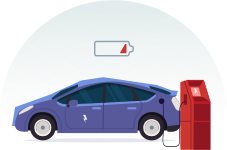
Car insurance for Electric Vehicles (EVs) is a type of motor insurance created specifically for battery-powered cars. It protects your EV from financial losses caused by accidents, theft, fire, natural disasters, and damage to third parties.
Since EVs have specialised parts like battery packs and electric motors, their repair costs can be higher than regular cars. A comprehensive car insurance plan for your EV can cover both third-party liabilities and damage to your own vehicle.
You can buy car insurance online for your electric vehicle, compare car insurance plans, and choose add-ons like zero depreciation or roadside assistance for better protection. Renewing your EV Car insurance on time keeps you legally compliant and ensures your car stays protected on the road.
HDFC ERGO EV Car Insurance Add-Ons
Electric vehicles have unique components, and HDFC ERGO offers a wide range of add-on covers to provide enhanced protection beyond the standard policy. These EV add-ons can be opted with comprehensive or standalone own damage electric car insurance.
1
Battery Charger and Accessories Cover
Covers damage to the battery charger and its accessories due to insured events such as fire, explosion, floods, or earthquakes.
2
Electric Motor Protection
Provides financial protection against repair or replacement costs of the electric motor and its components.
3
Zero Depreciation for Battery Charger
Ensures no depreciation is deducted while settling claims for the battery charger, detachable battery, or related accessories. This helps you get a higher claim payout.
In addition to the above, you can also opt for general add-ons with your EV policy, such as:
• Roadside Assistance Cover
• Downtime Protection Cover
• Return to Invoice Cover, and so on.
Steps for filing a car insurance claim
1. Notify Your Insurer:
Report the incident to your insurer immediately. We offer 24/7 support via phone, mobile app, or website.
2. Submit Essential Documents:
Provide necessary documents such as your car insurance policy, driver’s license, and vehicle registration certificate.
3. Damage Assessment:
The insurer will arrange for a surveyor to inspect and evaluate the damage to your vehicle.
4. Choose Your Repair Option:
• Cashless Repair:
Get your vehicle repaired at a network garage without paying upfront.
• Reimbursement:
Pay for the repairs yourself and claim the amount from your insurer later
What are the Documents Required for Filing a Car Insurance Claim?
The documents you need for filling a car insurance claim online may vary depending on the type of claim. Here’s a simple breakdown.
| Claim Type | Required Documents |
|---|---|
| General (Applicable to all claims) | • Completed Claim Form • Registration Certificate (RC) Copy (or tax receipt + invoice for new cars) • Aadhaar Card |
| Reimbursement Claims (Non-cashless) | • Original Claim Form • NEFT Mandate Form • Cancelled Cheque • RC Copy (or tax receipt + invoice for new cars) • Garage Estimate • Repair Invoice • Driving License Copy • Car Insurance Policy Copy • PAN Card / Form 60 • One Officially Valid Document • FIR / Police Report |
| Total Loss / Theft Claims | • Aadhaar Card • PAN Card • Original RC • Original Car Insurance Policy • Forms 28, 29 & 30 (three copies) • Indemnity Bond • FIR • NEFT Form • Cancelled Cheque • No Objection Certificate + Form 16 (if vehicle purchased on loan) |
Choose your coverage, add custom benefits, and hit the road worry-free.

The car customisation market in India was worth about
USD 0.09 billion in 2024 and is expected to expand to
around USD 0.98 billion by 2033!
[6]
Common Reasons For Car Insurance Claim Delays Or Rejections And How To Avoid Them
Understanding issues that affect a claim can help you take suitable precautions and reduce avoidable delays or queries during claim assessment.
| Common Reasons for Car Insurance Claim Delay or Non-Admissibility | Precaution To Consider |
|---|---|
| Driving without a valid driver's license | Ensure the driver holds a valid and appropriate driving licence at the time of the incident. |
| Driving under the influence of alcohol or drugs | Do not drive under the influence, as the claim is generally not admissible under the policy terms. |
| Delay in informing the insurer about the incident | Report the accident or loss to the insurer as soon as reasonably possible and follow the prescribed claim-intimation process. |
| Incident occurred after the policy expired | Renew the car insurance policy before its expiry date to avoid a break in cover. |
| Providing incorrect or incomplete information | Ensure that vehicle, previous-policy, and claim-related details provided to the insurer are accurate and complete. |
| Damage falling outside policy coverage | Review the policy inclusions, exclusions, and add-ons before raising a claim. |
| Further damage after an incident | Take reasonable steps to prevent further damage and follow the insurer’s guidance after an incident. |
| Vehicle being used for purposes not covered under the policy | Use the vehicle only for the purpose declared in the policy documents. |
| Failure to provide required documents | Keep the registration certificate, driving licence, policy details, photographs, claim form, and other requested records readily available. |
| Repairs undertaken before insurer approval | Inform the insurer and obtain guidance before authorising repairs, unless immediate action is required for safety or to prevent further damage. |
What to Keep in Mind When Buying a Car Insurance Policy Online?
If you are planning to purchase car insurance online, know that it is very easy and convenient. However, before you proceed, it is ideal to keep certain things in mind when buying the policy online.
1. Choose the Right Type of Car Insurance Policy
The first step is selecting the type of car insurance that suits your vehicle and usage.
• Comprehensive car insurance offers all-round protection by covering both third party liabilities and damage to your own car. It protects against accidents, theft, fire, natural calamities, and man-made disasters.
• Third party car insurance, on the other hand, only fulfils the legal requirement and does not cover damage to your own vehicle.
• If your car is very old or used infrequently, a third party policy may be sufficient to stay legally compliant.
You can also opt for a second hand car insurance plan if you have bought a car from another owner.
For most car owners, especially those with newer vehicles, a comprehensive plan offers better peace of mind and financial protection.
2. Understand the Insured Declared Value
The Insured Declared Value (IDV) plays a critical role in your car insurance policy.
• IDV represents the current market value of your car after depreciation.
• It is also the maximum amount you can receive in case of total loss or theft.
• A higher IDV increases coverage but also slightly increases your premium.
• A very low IDV may reduce your premium but can lead to lower claim payouts.
When you purchase car insurance online, choose an IDV that closely matches your car’s actual market value. This can help ensure fair compensation during claims.
3. Select the Right Add-on Covers
Add-ons allow you to enhance your comprehensive car policy based on your needs.
• Popular add-ons include Zero Depreciation, Engine Protection, Roadside Assistance, and Return to Invoice.
• Zero depreciation cover is especially useful for cars up to 5 years old. It allows full claim settlement without depreciation deductions.
• Add-ons increase your premium slightly but significantly improve coverage.
• Choosing unnecessary add-ons can increase costs, so select only those relevant to your driving habits and location.
The right combination of add-ons can help you avoid major out-of-pocket expenses during repairs.
4. Compare Car Insurance Plans Carefully
It is recommended to compare car insurance policies before finalising your purchase.
• Compare premiums along with the scope of coverage, exclusions, and benefits.
• A low premium does not always mean better value if coverage is limited.
• Look for policies that offer balanced pricing with meaningful protection.
• HDFC ERGO’s car insurance policies are designed to offer wide coverage at competitive premiums.
A side-by-side comparison helps you choose a plan that delivers both affordability and protection.
5. Look for a Wide Network of Cashless Garages
Cashless repairs can greatly reduce financial stress after an accident.
• A large network makes it easier to find a nearby garage.
• Repairs are settled directly between the insurer and the garage.
• You don’t need to arrange large sums up-front.
So, look for an insurer with a vast network of cashless garages. For example, the HDFC ERGO’s car insurance policy comes with more than 12200+ ˇ cashless garages across India to service your car.
6. Check the Claim Settlement Ratio of the insurer
An insurer’s claim performance matters just as much as pricing.
• The Claim Settlement Ratio (CSR) reflects how efficiently claims are settled.
• A higher CSR indicates better reliability and customer trust.
• Also review how easy it is to file, track, and settle claims.
Choosing an insurer with a strong claim track record means you get better support during stressful situations.
7. Evaluate the Claim Settlement Process
Finally, understand how quickly and smoothly claims are handled.
• A simple digital claim process saves time and effort.
• Faster repairs mean less disruption to your daily routine.
• Features like Overnight Vehicle Repairs¯ help you get back on the road quickly.
A hassle-free claims experience is a key indicator of a reliable car insurance policy.
What Factors Impact Insured Declared Value (IDV) in Car Insurance
1
Car type
The car value depends upon its type. There are three types of cars available in the market – hatchback, sedan, and SUV (Sports Utility Vehicle). A hatchback car is usually cheaper as compared to sedans or SUVs. Thus, the IDV would
vary accordingly.
2
Model of the car
Same type of cars but different car models can have different IDVs. This depends upon the brand i.e. manufacturer and the features offered on a certain model of car.
3
Purchase location
A minor cost difference can be observed depending upon the location from where the car was purchased. For example, the showroom price of the same car model can be different in Mumbai and Delhi.
4
Depreciation
The reduction in the monetary value of a car due to age is known as depreciation. As a car gets older, its depreciation also increases. For example, two cars of the same model will have different IDVs because they were manufactured in
different years.
5
Accessories
The depreciation of accessories is also calculated while calculating the amount of IDV. Thus, its value will change depending on the age and working condition of additional accessories.
No need to visit the insurer's office to purchase insurance for your car. Buy car insurance online in just a few clicks with HDFC ERGO.
The Future is EV Smart with HDFC ERGO EV Add-Ons
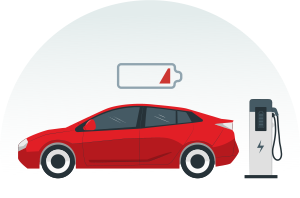
HDFC ERGO has great news for Electric Vehicle (EV) owners! We're introducing new add-on covers with our electric car insurance tailored specifically for EVs. These add-ons include protection for your battery charger and accessories, coverage for your electric motor, and a unique zero depreciation claim for the battery charger. Adding these covers to your electric car insurance policy can shield your EV from potential battery damage caused by unexpected events like floods or fires. As the heart of your EV, safeguarding your batteries and electric motor is a smart move. These three add-ons can be seamlessly added to your comprehensive or standalone own damage cover. The battery charger accessories add-on offers protection against damage due to fires and natural disasters like earthquakes or floods. The electric motor cover ensures coverage for any damage to your EV's motor and its components. With the zero depreciation claim for the battery charger, you'll be compensated for any depreciation when replacing the battery, including the detachable battery, charger, and accessories. Don't miss the chance to customise your electric car insurance policy – opt for these add-on covers and drive with peace of mind.
Pay as You Drive Add on Cover
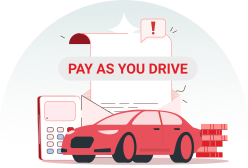
If you drive your car less or use it occasionally, paying a high car insurance premium may not feel justified. HDFC ERGO’s Pay As You Drive (Kilometre Benefit) add-on can help in such cases.
• The PAYD cover rewards low usage by offering benefits of up to 25% on your own damage premium at policy renewal.
• After policy expiry, simply declare the distance travelled to claim the benefit, even if you switch insurers.
• If you renew with HDFC ERGO, you can enjoy an additional 5% discount, provided no claims were made in the previous policy period.
Why Should You Buy Car Insurance in India?
Indian roads can be unpredictable. From rising accident rates to vehicle theft and climate-related damage, owning a car today comes with real risks. Given below are some facts and figure that drive home the importance of car insurance.

Road Accident Fatalities are Increasing
In 2024, India recorded over 1.77 lakh road deaths, averaging about 485 fatalities every day, making it one of the deadliest years on record for traffic crashes. [7]
How car insurance helps: With such high road risk, car insurance protects you from repair costs and financial liabilities arising from accidents.

India’s Roads Are Packed With Cars
Today, India has over 30 million passenger cars on the road, and this number keeps rising every year. With so many vehicles sharing the same roads, the chances of road mishaps, collisions, and accidental damage increase. [8]
How car insurance helps: Car insurance policy acts as an important safety net, by providing compensation in case of an accident, and allowing the policyholder to get car repairs without financial worries.

Extreme Weather Events Are Becoming More Common
According to recent analysis, India recorded extreme weather on 331 out of 334 days in the first eleven months of 2025. The events ranged from storms, cyclones, lightning, and cloudbursts to heavy rain, floods and landslides. [9]
How car insurance helps: Such events can seriously damage cars (especially engines and electronics), and comprehensive car insurance—along with add-ons like Engine Protection and Return to Invoice (RTI)—helps safeguard you against these sudden losses.

Car Theft Remains a Strong Threat in Urban Areas
Certain urban areas, like Delhi-NCR, remain hotspots for vehicle theft — with one report showing a vehicle disappearing every 14 minutes in parts of 2023. [10]
How insurance helps: With theft cover and RTI add-ons, you can recover the value of your car and avoid total financial loss if your vehicle is stolen.
Unpredictable Road Hazards Contribute to Claims
Accident analysis shows that potholes, stray animals and unusual hazards like falling coconuts cause many crashes in cities such as Bengaluru and Chennai. [11]
How insurance helps: These unpredictable risks often lead to damage claims, and insurance protects your repairs without heavy out-of-pocket costs.
Car Insurance Protects More Than Just Your Vehicle
Beyond repairs and theft, car insurance protects your savings, legal standing, and peace of mind. Whether it’s an accident, a natural disaster, or an unforeseen loss, having the best car insurance policy ensures you’re financially prepared.
With HDFC ERGO car insurance, you get wide coverage, trusted claim support, and protection designed for real-life risks. So, whether you are driving in Kolkata or Kolhapur, Kashmir or Kanyakumari, you can take the road with confidence.
How to Choose the Best Car Insurance Policy Online?
Though buying car insurance online is simple. You should keep certain aspects in mind while buying a car insurance policy.

The type of policy
Firstly, you should select the type of policy that you need for your car. A comprehensive insurance proves to be the best car insurance plan as it provides complete protection to your vehicle for all sort of vehicular damage due to an insurable peril. However, if your car is very old, you can opt for third party insurance to fulfill the legal mandate of driving your car.

Insured Declared Value
The Insured Declared Value of the car is the market value less the depreciation based on the car’s age. The IDV also represents the maximum coverage liability that the insurer undertakes. In case of a total loss to the vehicle due to an insured peril, the maximum claim amount would be the IDV of the policy. So, when buying new car insurance plan that is best, keep a lookout for the IDV. Choose an IDV that matches the market value of your car so that the claim is higher.

The add-ons needed
With comprehensive car insurance plans, you can opt for different add ons. Choosing the most suitable ones would help in availing complete coverage. For instance, a zero depreciation add on is a must for cars aged up to 5 years old. This add on helps get an entire claim as the insurer does not deduct depreciation value during the final settlement. So, assess the add ons available and choose the most suitable ones. Remember, adding each add on involves an additional premium.

Compare Plans
Always compare the best car insurance policy on their premiums vis-à-vis their coverage. A plan offering a comprehensive scope of coverage at the lowest rate of premium would be the best, just like HDFC ERGO’s car insurance policy. Hence, it is wise to always compare the car insurance price with the coverage offered.

Claim Settlement Ratio of the insurer
The Claim Settlement Ratio (CSR) indicates the percentage of claims that an insurance company settles in a financial year. The higher the CSR the better is the company in terms of claim settlement. So, compare the CSR and choose an insurer that has a high CSR.

Network of cashless garages in India
The network of cashless garages is a crucial parameter to increase the probability of availing of cashless settlement of claims. If the company has a vast network of cashless garages, you can quickly locate one. You can repair your car here without paying for the costs yourself. So, look for an insurer with a vast network of cashless garages. For example, the HDFC ERGO car insurance policy comes with more than 12200+ ˇ cashless garages across India to service your car.

The claim settlement process
The claim settlement process should be checked to understand how long would it take for your claims to get settled. The best car insurance policy is where the claim settlement process is simple and hassle-free. For instance, the HDFC ERGO car insurance policy offers Over Night Vehicle Repairs¯, where you don’t have to wait long for your vehicle to get repaired..
India’s pre-owned car market has become larger than the new car market, with used car sales
projected to rise from around 4.6 million in 2023 to about 10.8 million by 2030. [12]
projected to rise from around 4.6 million in 2023 to about 10.8 million by 2030. [12]
What to Know before Buying Car Insurance for Old/Second-hand Car?
A pre-owned car also requires a proper car insurance policy to get coverage from losses.
Having the right second hand car insurance protects your vehicle from repair costs, theft, and legal liabilities. Since a used car may already have an existing policy, there are a few important know before buying or renewing second-hand car insurance online.
1. Transfer the Existing Car Insurance Policy
If the previous owner already had a valid car insurance policy, make sure it is transferred to your name.
• Policy transfer ensures legal ownership of the cover
• It helps avoid claim rejection in the future
• The transfer can be initiated online with the insurer
Once transferred, the policy becomes active under your ownership.
2. Check the Claims History
Reviewing the car’s past claims gives you a clear picture of its insurance record.
• Helps you understand how often the car was repaired
• Indicates potential wear and tear
• You can check this by entering the policy number on the insurer’s website after transfer
This step helps you make an informed decision about coverage and add-ons.
3. Ensure No Claim Bonus (NCB) Is Transferred
If eligible, make sure the No Claim Bonus is transferred correctly.
• NCB helps reduce your car insurance premium
• It allows you to continue enjoying accumulated discounts
Always confirm NCB details after policy transfer.
4. Buy New Insurance If No Policy Exists
If the previous owner’s car insurance has expired or was never renewed:
• You can immediately buy a new car insurance policy
• Choose between comprehensive or third party car insurance
• Buying car insurance online is quick and paperless
Do not drive the car without valid insurance, as it is legally mandatory.
5. Check the Policy Expiry Date
After the insurance is transferred or newly purchased, verify the policy validity.
• Renew the policy before it expires
• Timely renewal helps retain NCB benefits
• It avoids inspection delays and coverage gaps
Renewing on time ensures uninterrupted protection.
With HDFC ERGO, buying or renewing second hand car insurance online is simple, transparent, and hassle-free, so your pre-owned car stays protected from day one.
How to Download Your Car Insurance Policy Online?
Here’s how you can download car insurance policy online:
- 1

Visit the website / Browse
Start the process by visiting the HDFC ERGO website. Click on the ‘Help’ icon on the homepage. Then click on ‘Email/Download policy copy’.
- 2

Input Details
Enter your policy details, such as your policy number, mobile number, etc. - 3

Verify
Verify your identity by entering the OTP sent to your registered mobile number. Complete profile verification if required. - 4

Receive copy
After verification, you can view, print, or download your car insurance policy.
Car Insurance Policy Documents
| Brochure | Prospectus | Policy Wordings |
| Get details about our car insurance policy's key benefits, coverages and exclusions in the brochure. Our car insurance brochure will help you know the in-and-out about our policy. With the help of our brochure, you can understand the terms and conditions of the HDFC ERGO car insurance policy in an accurate manner. | Get details about our car insurance policy's key benefits, coverages and exclusions in the prospectus. Please refer to the car insurance policy prospectus for complete product details. | To understand the exact conditions under which claims are payable, it is important to read the policy wordings. Please refer to the car insurance policy wordings for the terms and conditions. |
Car Insurance for Popular Brands
Car Insurance for Popular Indian Models
Car Insurance in Metro Cities
Cars represent ease, reliability, and thoughtful mobility. However, sometimes Indian road conditions can change without warning. HDFC ERGO car insurance extends comprehensive coverage across major Indian cities. With an expansive cashless garage network, flexible plans, and a high claim settlement ratio, it supports car owners in managing financial risks while staying compliant with local traffic regulations.
Car Insurance Terms You Need to Know
Understanding common car insurance terms helps you choose the right cover, avoid surprises during claims, and make informed decisions while buying or renewing your policy.
1. Driving License
A driving licence is a legal authorisation issued by the RTO that allows you to drive a specific type of vehicle on Indian roads. Driving without a licence or with an expired licence can lead to claim rejection.
2. RTO
The Regional Transport Office or the RTO is the official government body which registers all vehicles in the Indian subcontinent as well as issues driving licences. It maintains records of vehicle ownership, registration details, and licence validity.
3. Third Party Liability Coverage
This is the mandatory car insurance cover required by law. It protects you against legal liabilities arising from injury, death, or property damage caused to a third party by your vehicle. It does not cover damage to your own vehicle.
While there is no upper limit on coverage for third party death or injury, the compensation for damage to a third-party property and vehicle is limited to a maximum of ₹7.5 lakhs.
4. Comprehensive Coverage
A comprehensive car insurance policy covers third party liabilities and damage to your own car due to accidents, theft, fire, or natural calamities. It also allows you to add optional add-on covers for wider protection. It is not mandatory but advisable to opt for a comprehensive plan.
5. Car Insurance Premium
The premium is the amount paid to the insurer for coverage during the policy period. Paying premiums on time keeps the policy active. The premium amount depends on factors such as IDV, car model, location, claims history, add-ons chosen, and policy type.
6. Insured Declared Value
IDV is your car’s current market value after depreciation. In a car insurance policy, it represents the maximum amount the insurer would pay as a claim in the event of total loss or irreparable damage due to an accident or theft. Since depreciation increases every year, the insured declared value of your car reduces over time.
7. Deductibles
In motor insurance, deductibles are a part of the claim amount the insured person will have to pay during claim settlement. The insurer pays the rest of the claim amount. There are two types: voluntary and compulsory deductible.
• Compulsory deductible is fixed by regulation
• Voluntary deductible is chosen by you to reduce premium
Opting for a higher voluntary deductible lowers premium but increases your share during a claim.
8. No Claim Bonus
No Claim Bonus in car insurance is a reward given for not making any claims during a policy year. It is offered as a premium discount at renewal and can go up to 50% over consecutive claim-free years. NCB belongs to the car owner, not the vehicle, and can be transferred when you buy a new car.
9. Cashless Garages
Cashless garages are authorised service centres partnered with your car insurance provider. When you repair your car at a network garage, the insurer directly settles the approved repair cost with the garage. You only need to pay deductibles or any non-covered expenses.
10. Add-on Covers
Add-on covers are optional benefits that enhance your comprehensive car insurance policy. Popular add-ons include zero depreciation, engine protection, return to invoice, roadside assistance, consumables cover, and NCB protection.
11. Personal Accident Cover
Personal Accident Cover provides financial protection to the owner-driver in case of death or permanent disability due to an accident. As per IRDAI guidelines, a minimum cover of ₹15 lakh is mandatory. This cover can be extended to include other individuals too.
12. Total Loss
A car is declared a total loss when repair costs exceed a defined percentage of its IDV or if the vehicle is stolen and not recovered. In such cases, the insurer pays the IDV amount after deducting applicable deductibles.
13. Endorsement
An endorsement is an official change made to your policy during its tenure. This can include updating personal details, adding accessories, correcting registration information, or changing address details.
14. Anti-Theft Device
An anti-theft device is a security system installed in your car to prevent theft, such as an engine immobiliser or alarm system. Cars fitted with IRDAI-approved anti-theft devices are considered lower risk by insurers. They may qualify for a discount on the car insurance prices.
15. Consumables Cover
Consumables refer to items that are used up during vehicle repairs and are usually not covered under a standard car insurance policy. This includes engine oil, brake oil, coolant, nuts and bolts, grease, washers, and similar items.
A consumables add-on cover can ensure these costs are reimbursed during a claim.
16. Third-Party Property Damage (TPPD)
This refers specifically to the damage caused to another person’s vehicle or property. Compensation for TPPD is capped at ₹7.5 lakh as per current regulations.
17. Break-in Insurance Inspection
If a policy expires and is not renewed on time, the insurer may inspect the car before renewal. This process checks for existing damages before activating fresh coverage.
18. Subrogation
After settling a claim, the insurer may legally seek to recover the amount from another party responsible for the loss. This process is known as subrogation and does not involve the policyholder.
19. Downtime Cover
This add-on compensates for daily transport costs if your car is under repair after an accident to help reduce inconvenience.
20. IDV Depreciation Schedule
Insurers follow a standard IRDAI depreciation table to calculate IDV based on vehicle age. As cars get older, IDV reduces, which impacts both premiums and total loss payouts.
| Age of Vehicle | Standard Depreciation % |
|---|---|
| Up to 6 months | 5% |
| More than 6 months up to 1 year | 15% |
| More than 1 year up to 2 years | 20% |
| More than 2 years up to 3 years | 30% |
| More than 3 years up to 4 years | 40% |
| More than 4 years up to 5 years | 50% |
21. Salvage Value
Salvage is the remaining value of your car after severe damage or total loss. Insurers deduct the salvage value from the claim payout if the car is not handed over to them.
22. End of Life (EOL) Vehicle
In India, private petrol cars older than 15 years and diesel cars older than 10 years may be categorised as EOL based on local regulations (like in Delhi NCR). These vehicles may face restrictions and different insurance considerations
23. Surveyor
In case of an accident, the insurer sends a surveyor to the accident spot or the garage to inspect the car, take photos, and record details. This helps the insurer verify the cause of damage, estimate repair costs, and avoid disputes later during claim settlement.
24. Free Look Period
The free look period is a short window after you receive your policy during which you can review the terms and cancel the policy if you are not satisfied — and get a refund of the premium paid, subject to permitted deductions.
25. Consequential Loss
Consequential loss refers to indirect financial impacts that arise as a result of a damage event, such as loss of business income or secondary effects. These are usually not covered under a standard insurance policy unless separately insured.
26. Grace Period
The grace period is the extra time after your car insurance expiry during which you can renew the policy without losing benefits like No Claim Bonus, though claims are not allowed in this period.
27. Geographical Limit
The geographical limit is the specified area (usually within India) where your car insurance policy provides coverage — losses that happen outside this region may not be covered unless the policy states otherwise.
28. Named Driver
This refers to a specific person listed in the policy who is authorised to drive the insured vehicle. Claims may be denied if an unlisted or unlicensed driver was operating the car during an incident.

12200+
cashless Garagesˇ Across India
Find your Nearest Cashless Garage
Know What the Expert Speaks About Car Insurance Plans

Mukesh Kumar | Motor Insurance Expert | 30+ years of insurance industry experience
I recommend getting your car insured from HDFC ERGO, a brand serving more than 3.1 Crore+ Happy Customer@ With Over Night Vehicle Repairs¯ and more than 12200+ cashless Garagesˇ, you can be assured of help in event of any damage to your vehicle. Also one should insure his/her vehicle and avoid getting heavily fined under the recently enacted Motor Vehicle Amendment Act 2019.
Car Insurance Reviews & Ratings


Zala Dharmendrasinh
Private Car OD Only28 Apr 2026
Overall, I had a good experience with HDFC ERGO General Insurance. The process was smooth, the response time was quick, and the support team was very helpful. Thank you for the service.
Sylvia Furtado
Private Car Comprehensive Policy23 Apr 2026
Received prompt and reliable service with quick responses and clear clarifications. Highly appreciate the enthusiasm and dedication in assisting customers. Keep up the great work!
Arvind Mishra
Private Car Package Policy Bundled23 Apr 2026
Thank you for the timely service. Overall, the experience was good.
Thirumala Sravan Kumar
Private Car Comprehensive Policy20 Apr 2026
I would like to appreciate the excellent in-house service. The process was smooth and handled efficiently, and the support provided made a real difference. Thank you for the great service.
Abhay Singh Rathore
Private Car Package Policy Bundled20 Apr 2026
Very happy with the overall experience. The survey was conducted promptly, and the entire process was completed smoothly and efficiently. Truly appreciate the professionalism.
Bhupinder Pal Singh
Private Car Comprehensive Policy15 Apr 2026
Very good experience overall. The process was smooth, and I truly appreciate the timely support and guidance throughout.
Piyali Bhattacharya
Private Car Package Policy Bundled10 Apr 2026
Overall, it was a good experience. The process took a bit longer than expected, but everything else was handled well. I would definitely recommend it to others and would consider choosing HDFC ERGO again for my next insurance.
Saransh Bhoi
Private Car Package Policy Bundled06 Apr 2026
It was my first time learning about HDFC ERGO, and I believe there’s great potential to increase awareness through more visibility and outreach. The pricing was very competitive, which made it an even better choice
for me.
Gadyapaga Swarupa
Private Car Package Policy Bundled05 Apr 2026
Awesome experience with HDFC ERGO. The claim settlement process was smooth and stress-free, offering complete peace of mind. Great value for money with excellent customer support.
Mahesh Deju Kotian
Private Car Comprehensive Policy26 Mar 2026
Your services are quick, reliable, and well-executed. The efficiency and quality of support truly build customer trust and confidence. Keep up the great work!
SADHU LAL
PRIVATE CAR COMPREHENSIVE POLICY10 Feb 2025
I was able to track my policy easily with your service. Due to this, I was able to retain my NCB discount.
THIRUMALA SRAVAN KUMAR
PRIVATE CAR COMPREHENSIVE POLICY20 Apr 2026
I would like to appreciate the excellent in-house service. The process was smooth and handled efficiently, and the support provided made a real difference. Thank you for the great service.
ABHAY SINGH RATHORE
PRIVATE CAR PACKAGE POLICY BUNDLED20 Apr 2026
BENGALURU
Very happy with the overall experience. The survey was conducted promptly, and the entire process was completed smoothly and efficiently. Truly appreciate the professionalism.
SYLVIA FURTADO
PRIVATE CAR COMPREHENSIVE POLICY23 Apr 2026
Received prompt and reliable service with quick responses and clear clarifications. Highly appreciate the enthusiasm and dedication in assisting customers. Keep up the great work
ZALA DHARMENDRASINH
PRIVATE CAR OD ONLY18 October 2024
EAST SIANG
I appreciate the quick response of your customer care team. Thank you.
MR RAJAN MAHENDRA
PRIVATE CAR OD ONLY19 September 2024
CHENNAI
I must say that customer service experience at your Guindy office was amazing.
JAYDATT CHETANBHAI MAHAJAN
PRIVATE CAR PACKAGE POLICY BUNDLED30 August 2024
SURAT
Excellent service by your customer care team.
ROBIN KOSHY CHERIAN
PRIVATE CAR COMPREHENSIVE POLICY23 August 2024
BENGALURU
I think that the HDFC ERGO system works efficiently and they have hired well-trained staff to handle client queries. My problem was resolved in just 2-3 minutes.
GAUTAM KUMAR SAHOO
PRIVATE CAR COMPREHENSIVE POLICY21 August 2024
CHAIBASA
Your customer care executive helped me easily identify whether ekyc was linked to my policy. I appreciate the helpful nature of that person.
MR RAJAN MAHENDRA
PRIVATE CAR OD ONLY16 August 2024
CHENNAI
I had a good experience with the customer service officer at your Guindy branch in Chennai.
RAGLI BAGRA
PRIVATE CAR PACKAGE POLICY BUNDLED16 August 2024
EAST SIANG
Thank you HDFC ERGO customer care team for your quick response.
PRASAD SUDHAKAR BHARDWAJA
PRIVATE CAR COMPREHENSIVE POLICY9 August 2024
PUNE
The process at HDFC ERGO is simple and I always receive quick responses to my mail every time from your team.
SRIDHAR AKULA
PRIVATE CAR PACKAGE POLICY BUNDLED7 August 2024
CHENNAI
My claim request went well in the end. Initially I found difficult raising the claim, however, in the end everything was resolved.
HARDIK RAJESHKUMAR AGRAWAL
PRIVATE CAR COMPREHENSIVE POLICY31 July 2024
VADODARA
Customer care services provided by HDFC ERGO is remarkable.
SURAJ KUMAR
PRIVATE CAR LIABILITY ONLY30 July 2024
JAMMU
The customer care executive person was very humble and soft-spoken. Your team members have perfect telephone etiquette with remarkable voice modulation.
TAKHI SHAKEEL MOULAVI
PRIVATE CAR PACKAGE POLICY BUNDLED25 July 2024
SOLAPUR
My experience with HDFC ERGO is excellent.
AJAY KUMAR KAUL
PRIVATE CAR PACKAGE POLICY BUNDLED19 July 2024
FARIDABAD
HDFC ERGO team provides good support to the customer.
CHHAGAN LAL
PRIVATE CAR COMPREHENSIVE POLICY12 July 2024
DAHOD
I must say that HDFC ERGO provides the best services to their customers.
VIKRAMADITYA RAI
PRIVATE CAR PACKAGE POLICY BUNDLED14 June 2024
VARANASI
HDFC ERGO provides the best customer car service. I like their behaviour of responding promptly and instantly starting the work on that query.
N S KUMAR NA
PRIVATE CAR COMPREHENSIVE POLICY14 June 2024
CHENNAI
The customer care executive who attended to my call was extremely courteous, and called me thrice to resolve the issue. Full marks to the customer care team for superb customer care attitude.
VIJAY SHANKAR MENON
PRIVATE CAR25 May 2024
COIMBATORE
Your sales manager was very helpful and proactive in getting the policy renewed.
TUMULURI RAVI KUMAR
PRIVATE CAR COMPREHENSIVE POLICY21 May 2024
BENGALURU
HDFC ERGO provides doorstep services and are very excellent at their work. Whenever I have approached your team, they have provided quick solution to my query.


Latest News around Car Insurance
 2 Min Read
Supreme Court Mandates 4‐Year Third Party Insurance for All New Cars
The Supreme Court has mandated four‐year third party insurance for all new cars to reduce uninsured vehicles and improve road safety, strengthening protection for accident victims.
READ MOREPublished on August 5, 2026
 2 Min Read
PM Modi Urges Fuel Conservation Amid Global Energy Uncertainty
Due to rising fuel prices and global tensions between the US and Iran, Prime Minister Narendra Modi has asked citizens to reduce fuel usage and travel more responsibly.
READ MOREPublished on May 11, 2026
 2 Min Read
Genesis Unveils Magma GT Concept: What’s Coming Next
Recently, Hyundai’s luxury arm, Genesis, has unveiled its latest model, the Magma GT Concept. The car features a mid-rear engine layout, sleek lines, muscular fenders and a sharply raked rear deck.
READ MOREPublished on February 17, 2026
 2 Min Read
Car Mileage in India to Be Tested With AC Switched On
From October 1, 2026, the Indian government plans to make car mileage testing with the air-conditioning system running mandatory for all passenger cars sold in the country. The draft rule, proposed by the Ministry of Road Transport and Highways, is aimed at giving car buyers more realistic and practical fuel-efficiency figures that better reflect on-road conditions and help them make smarter purchase decisions.
READ MOREPublished on January 22, 2026
 2 Min Read
Kia Prepares to Introduce EV2 Electric Crossover on January 9
Kia will unveil its entry-level EV2 at the 2026 Brussels Motor Show on 9 January. Likely headed to India, the compact EV retains its concept-inspired design and is expected to offer a 400-volt setup, a single front motor and two battery choices, delivering an estimated 450-500 km range.
READ MOREPublished on December 11, 2025
 2 Min Read
Toyota Recalls Hyryder SUVs Over Faulty Fuel Indicator
Toyota Kirloskar Motor has recalled 11,529 Urban Cruiser Hyryder SUVs in India over a potential fuel gauge fault in the instrument cluster. Dealerships will contact affected owners for inspections and replacements. The SUV, available in petrol, CNG, and PHEV variants, is priced from Rs 10.94 lakh to Rs 19.76 lakh.
READ MOREPublished on December 3, 2025
Read the Latest Car Insurance Blogs
Impact of E20 Fuel on Car's Performance and Insurance Coverage
See full articlePublished on 23 July 2026

Drive more, stress less. See how our car insurance plans protect your daily driver against unforeseen events.
Car Insurance FAQs
How quickly can I buy car insurance online?
To buy car insurance online, all you need to do is — enter vehicle details, choose coverage, and pay. Your policy is issued instantly and sent to your email.
Do I need to have a valid insurance policy to get my new vehicle registered?
Yes, you need to valid third party car insurance policy for registration of your vehicle.
Are offline and online car insurance policies same?
Yes, both are same. Both online and offline car insurance policies offer the same coverage and benefits.
In case of my job and place change, what happens to my motor policy?
In case of a location change, the car policy will remain more or less the same. However, the premium may change depending on the city you have shifted.
What happens to the 4 wheeler insurance policy, if I sell my car?
You must transfer the policy to the new owner. Your NCB can be retained for a new car. You may also cancel the policy if needed.
How do I get a copy of my car insurance policy online? Will the printout of the softcopy serve as the original document?
Visit the HDFC ERGO website, enter your policy details, and download the PDF. A printed copy of your car insurance policy is valid as an original document.
What are the different modes of payment accepted online? Are there different schemes?
You can pay the premium through a credit card, debit card, or a net banking facility. It is generally paid as a lump sum. Instalment options may not be available for all policies.
Am I eligible for a car insurance discount if I install anti-theft alarm and locking system?
Yes. If your car is fitted with an IRDAI-approved anti-theft device, you may be eligible for a discount on your car insurance premium.
What is bumper to bumper car insurance?
Also called the Zero Depreciation add-on, it removes depreciation deductions on parts during claims, to help you get a higher payout.
How can I change/modify my car insurance policy details?
Contact HDFC ERGO customer care at 1800 2700 700 to update or modify policy details.
Does HDFC ERGO resolve claims beyond city limits?
Yes, claims can be registered from anywhere. Just provide RC, DL, and policy details and follow the standard claim process.
What is the meaning of Depreciation in car insurance?
Depreciation is the reduction in a car’s value over time due to wear and tear. It affects claim payouts unless you opt for zero depreciation cover.
Once the inspection request is logged online, how long does it take to get the car policy?
Usually within 1–2 days after inspection approval, though it may take up to a week in some cases.
Am I eligible for a discount if I am a member of Automobile Association of India?
Yes. If you are a registered member of a recognised automobile association, you may be eligible for car insurance premium discounts. You can provide valid membership proof for the same.
What are electrical and non-electrical accessories? How do you calculate their value?
Electrical accessories include music systems, lights, etc., and non-electrical accessories include seat covers or alloy wheels. Their value is based on purchase price minus depreciation.
What is the meaning of the phrase ‘legal liability of the paid driver’?
It means the insurer covers compensation if a hired driver gets injured or dies while driving your insured vehicle.
Where can I view the list of cashless garages in my city?
You can visit this dedicated page on the HDFC ERGO website to search for network cashless garages by state, city, or PIN code.
What is an ARAI-approved car-theft device? What are the benefits of installing the same?
An ARAI-approved anti-theft device is a certified lock, alarm, immobiliser, or tracker that helps prevent theft. Installing one reduces theft risk and may make you eligible for a premium discount.
How much fine do I have to pay in case I do not have car Insurance?
Driving without valid insurance can lead to a fine of ₹2,000 and/or up to 3 months jail (first offence). For repeat offences, the fine may increase to ₹4,000 plus possible jail.
What are the different types of Motor or Car Insurance Policies and what does it cover?
There are three main types of car insurance policies:
• Comprehensive: Own damage + third-party + option for add-ons.
• Third Party: Mandatory; covers injury/property damage to others.
• Standalone Own Damage: Covers damage to your car if you already have TP cover.
What are the benefits of renewing from the same insurer?
You may get faster renewals, NCB continuity, loyalty benefits, and avoid coverage gaps. This prevents policy lapses and reduces chances of claim issues.
What is the criteria for determining Total loss/Constructive Total Loss?
A total loss occurs when the car is stolen/not recovered or repair costs exceed the IDV. Constructive total loss occurs when repair + recovery costs exceed 75% of the IDV.
What is the Depreciation schedule to set the IDV in case of car loss?
IDV = ex-showroom price minus depreciation based on the vehicle’s age. Depreciation increases with age and determines the maximum claim in total loss/theft.
| AGE OF THE VEHICLE | % OF DEPRECIATION FOR FIXING IDV (% applied on vehicle ex-showroom price) |
| Not exceeding 6 months | 5% |
| Exceeding 6 months but not exceeding 1 year | 15% |
| Exceeding 1 year but not exceeding 2 years | 20% |
| Exceeding 2 years but not exceeding 3 years | 30% |
| Exceeding 3 years but not exceeding 4 years | 40% |
| Exceeding 4 years but not exceeding 5 years | 50% |
| Exceeding 5 years but not exceeding 6 years | 60% |
| Exceeding 6 years but not exceeding 7 years | 65% |
| Exceeding 7 years but not exceeding 8 years | 70% |
| Exceeding 8 years but not exceeding 9 years | 75% |
| Exceeding 9 years but not exceeding 10 years | 80% |
| Exceeding 10 years but not exceeding age permitted by RTA | 85% |
What is the Turn-Around-Time for policy servicing and claims?
TAT varies by process (proposal, policy issue, endorsements, claims). Many services are completed within 4–7 days, surveyor visits within 24 hrs, and claim settlement within 7 days after survey report.
What is the cost of car insurance?
There is no fixed cost of car insurance. Premium depends on policy type, car model, fuel type, IDV, add-ons, and city of registration.
How to check 4 wheeler insurance status?
Check via your insurer’s website using policy details, or on VAHAN/Parivahan using your vehicle number.
Can car insurance be done online?
Yes, you can buy car insurance online, compare car insurance plans, customise coverage, select add-ons, and make secure payments.
Which type of car insurance is best?
Comprehensive insurance is considered best as it covers both own damage and third-party liability.
What is first party car insurance?
It refers to the own-damage part of the policy — covering your car against accidents, theft, fire, floods, etc.
Will my car insurance premium decrease if I select a lower IDV?
Yes, lower IDV reduces premium but also lowers the claim payout in total loss/theft. It's ideal to keep IDV close to the market value.
Is car insurance mandatory in India?
Yes, third-party car insurance is mandatory under applicable motor vehicle laws for vehicles used on public roads in India.
What is comprehensive car insurance?
Comprehensive car insurance combines third-party liability cover with protection for covered damage to the insured vehicle, subject to policy terms.
What is the benefit of a No-Claim Bonus (NCB)?
NCB is an eligible discount for claim-free policy periods. It provides a discount of up to 50% on the own-damage premium, subject to eligibility and policy terms.
Can I buy car insurance online?
Yes. You can buy car insurance online by entering the required vehicle details, selecting suitable coverage, and completing the payment process.
What documents are required for a car insurance claim?
Depending on the claim, required documents include the vehicle registration certificate, driving licence, policy details, claim form, photographs, repair documents, and other claim-related records as applicable.
How is a car insurance premium calculated?
The premium depends on factors such as vehicle type, age, location, IDV, claim history, deductibles, selected add-ons, and applicable NCB.
My motor insurance policy expired; how can I renew in case of break-in of my policy?
Visit the insurer’s website, complete a self-inspection, upload documents, and pay once approved to renew the policy.
What is an endorsement? What is premium and non-premium bearing endorsement?
Endorsement is a change made to your policy (like details or coverage). If it affects premium, it's premium-bearing; if not, it's non-premium-bearing.
What is loading/ loading period in a policy?
Loading is an extra amount added to premium due to higher risk or past claims. It helps insurers balance expected losses.
Is my NCB transferable when I change my car or insurer?
Yes, NCB can move across insurers or to a new car. An NCB certificate from the insurer is needed for transfer.
What is IDV in insurance?
IDV is the maximum payable in case of total loss or theft, based on market value minus depreciation. Higher IDV means higher premium.
What is the process to claim car insurance?
Inform the insurer, file FIR if required, take the car to a network garage, and submit documents. A surveyor will assess the damage before settlement.
Which is the best car insurance to buy?
The best car insurance in India is one that offers wide coverage and financial protection. Comprehensive policies are generally best as they cover own damage, third-party liability, and offer add-ons.
What is zero depreciation in car insurance?
Zero depreciation (also called bumper-to-bumper insurance) is an add-on cover that helps you receive a higher claim amount by removing depreciation deductions.
What is consumables in car insurance?
Consumables in car insurance refer to items (like oils, grease, nuts, bolts, and washers) that are used up during repairs and are not reusable. These are usually not covered under standard policies.
Are there any discounts offered on an electric car insurance policy?
Yes, EV owners may get discounts on third-party premium and additional savings through NCB.
Can I buy car insurance on EMI?
In many cases, yes. Some insurers allow EMI payments on comprehensive plans. Availability varies by insurer.
Does your policy cover rat bites?
Yes, comprehensive insurance generally covers rat damage like chewed wires, depending on insurer policy terms.
What is Roadside Assistance Cover in Car?
Roadside Assistance Cover provides you with the necessary help during breakdowns, such as towing, battery jump-start, tyre change, fuel delivery, or minor repairs. Useful when the car stops mid-journey.
Will I require car insurance for my electric car?
Yes, third-party insurance is mandatory for EVs, and comprehensive cover with EV add-ons is recommended for better protection.
Is comprehensive car insurance mandatory?
No. Only third-party insurance is mandatory. Comprehensive is optional but advisable as it covers own damage + third-party.
Can I buy add on covers with Third party car insurance?
No, add-ons are available only with comprehensive or own damage policies.
Does zero depreciation add-on cover provide coverage to every part of my car?
Zero depreciation covers almost all car parts, but usually excludes tyres, tubes, and normal wear and tear.
What is the meaning of No claim bonus?
No Claim bonus is a discount on renewal premium for claim-free years, starting from 20% and going up to 50%.
What is NCB Retention Cover?
This add-on cover retains your No Claim Bonus even after you have raised a claim for damage caused to your parked vehicle.
If I have LPG or CNG kit fitted in the car, but it’s not endorsed in the RC book, will it be covered in the policy?/ If I fit CNG or LPG kit in my car, is it necessary to inform the Insurance Company?
No, it will not be covered, because the information on your insurance policy must match the details of the car when making a claim.
If I purchase new accessories for my car, can I get them insured in the middle of the insurance policy term?
Yes, you can get the coverage. Inform the insurance company and pay an additional pro-rated premium to get accessories covered.
What do you mean by Constructive Total Loss?
When repair and recovery costs exceed 75% of the IDV, the vehicle is treated as constructive total loss.
What do you mean by Constructive Total Loss?
When repair and recovery costs exceed 75% of the IDV, the vehicle is treated as constructive total loss.
When should I opt for the Roadside Assistance service?
You can use 24*7 roadside assistance for breakdown, tyre replacement, towing, fuel replacement etc. by contacting the customer care.
What is deduction for depreciation?
Depreciation refers to the reduction in value of car parts over time. Unless you have a Zero Depreciation cover, claims are paid after deducting depreciation.
What is personal accident cover in vehicle insurance?
It provides financial compensation in case of injury, disability, or death of the owner-driver due to an accident.
Is an accident covered in car insurance?
Yes, car insurance covers vehicle damage and offers compensation for driver injury or death.
Is paint covered under car insurance?
Yes, if damage is due to an insured event like accident, vandalism, or floods. Regular wear or minor scratches may not be covered.
Are passengers covered by car insurance?
Yes, in many cases through the personal accident cover. Additional passenger add-ons can offer enhanced protection.
What is Key Protect cover?
Key Protect or Key Replacement add-on by HDFC ERGO covers the cost of replacing lost/stolen car keys and may include locksmith or reprogramming charges for smart keys.
What if the car insurance policy expires?
You lose financial protection, risk legal penalties, and may pay out-of-pocket for accidents. Driving uninsured can attract fines or jail.
How can I check my policy renewal payment status?
You can check via Insurance Information Bureau (IIB) or VAHAN by entering vehicle details to view policy status and expiry.
What are the benefits of timely policy renewal?
You retain NCB, stay protected against third-party claims, get coverage for own damage, and maintain mandatory PA cover.
What are the steps to renew Car insurance online??
Visit the insurer’s website, enter vehicle/policy details, review the quote, select coverage, and pay securely to renew.
Can I choose not to claim if the damage is minimal? What do I gain out of it?
Yes. Avoiding small claims helps you retain NCB, which can reduce premium by up to 50%.
How can I cancel my claim?
You can contact your insurer to cancel a filed claim.
If I lodge my claim after the vehicle insurance policy expires for the event that occurred during the policy term, will the claim be valid?
Generally yes, if the claim was reported during the active policy. Delay may lead to rejection, so notify immediately.
How many times can we claim car insurance in a year?
There’s no limit, but claims affect NCB and renewal premium. Total paid claims cannot exceed the vehicle’s IDV.
What is voluntary deductible?
A voluntary deductible is a part of the claim that the insured person has to pay from their pocket before raising the claim with the insurance provider.
Is there a need to file an FIR to raise a claim?
For theft, major accidents, or third-party cases, FIR is usually required. Minor damages may not need it, depending on insurer rules.
Rural India is becoming a strong growth engine for cars. In 2025, passenger vehicle sales in rural markets grew by 12%, surpassing urban centres, which grew at 8%, according to data from the Federation of Automobile Dealers Associations (FADA).
[13]
Reference Links
Citations
1.
 Source: 78% of India’s Road Accidents Occur in Metro Cities
2.
Source: India’s Passenger Vehicle Sales Hit Record High in FY25
3.
Source: NATRAX – India’s Automotive Testing Track
4.
Source: 27,000 Deaths on National Highways in First Half of 2025
5.
Source: India EV Market Reaches 2.3 Million Sales in 2025
6.
Source: India Car Customization Market Report
7.
Source: Daily Road Deaths Touched 485 in 2024
8.
Source: Over 30 Million Cars on Indian Roads
9.
Source: India Faced Disasters on 331 Days in 2025
10.
Source: Unsafe Cities for Car Owners in India (2024)
11.
Source: Stray Dogs & Coconuts Cause More Accidents Than Drunk Driving
12.
Source: India’s Used Car Market to Hit 108 Million Sales by 2030
13.
Source: Rural India Leads Passenger Vehicle Boom in 2025
Awards & Recognition


Awards September 2021


Award of the Year

Award of the Year
Your Car Insurance is just a few steps away!

Premium starting
at Just ₹2094*12200+
cashless GaragesˇOvernight Car
Repair ServicesX
 Health Insurance
  Car Insurance
  Bike/Two Wheeler Insurance
  Travel Insurance
  Cyber Insurance
  Critical Illness Insurance
 Pet Insurance
 Home Insurance
  Third Party Vehicle Ins.
  Tractor Insurance
  Goods Carrying Vehicle Ins.
  Passenger Carrying Vehicle Ins.
  Compulsory Personal Accident Insurance
 - Optima Secure
- Optima Secure +
- Optima Secure Individual
- Optima Secure Global Individual
- Optima Secure Global Family
- Optima Super Secure plan
- Optima Super Secure plan Individual
- For Individual
- For Family
- For Parents
- For Senior Citizen
- Global Health Insurance
- Critical illness Insurance
- Super Top up Insurance
- Arogya Sanjeevani Policy, HDFC ERGO
- Koti Suraksha
- For Individual
- For Family
- For Parents
- For Senior Citizen
- Global Health Insurance
- Optima Secure
- Optima Secure +
- Optima Secure Individual
- Optima Secure Global Individual
- Optima Secure Global Family
- Optima Super Secure plan
- Optima Super Secure plan Individual
- Critical illness Insurance
- Super Top up Insurance
- Arogya Sanjeevani Policy, HDFC ERGO
- Koti Suraksha
 Travel Insurance
  Rural
Rural 


